
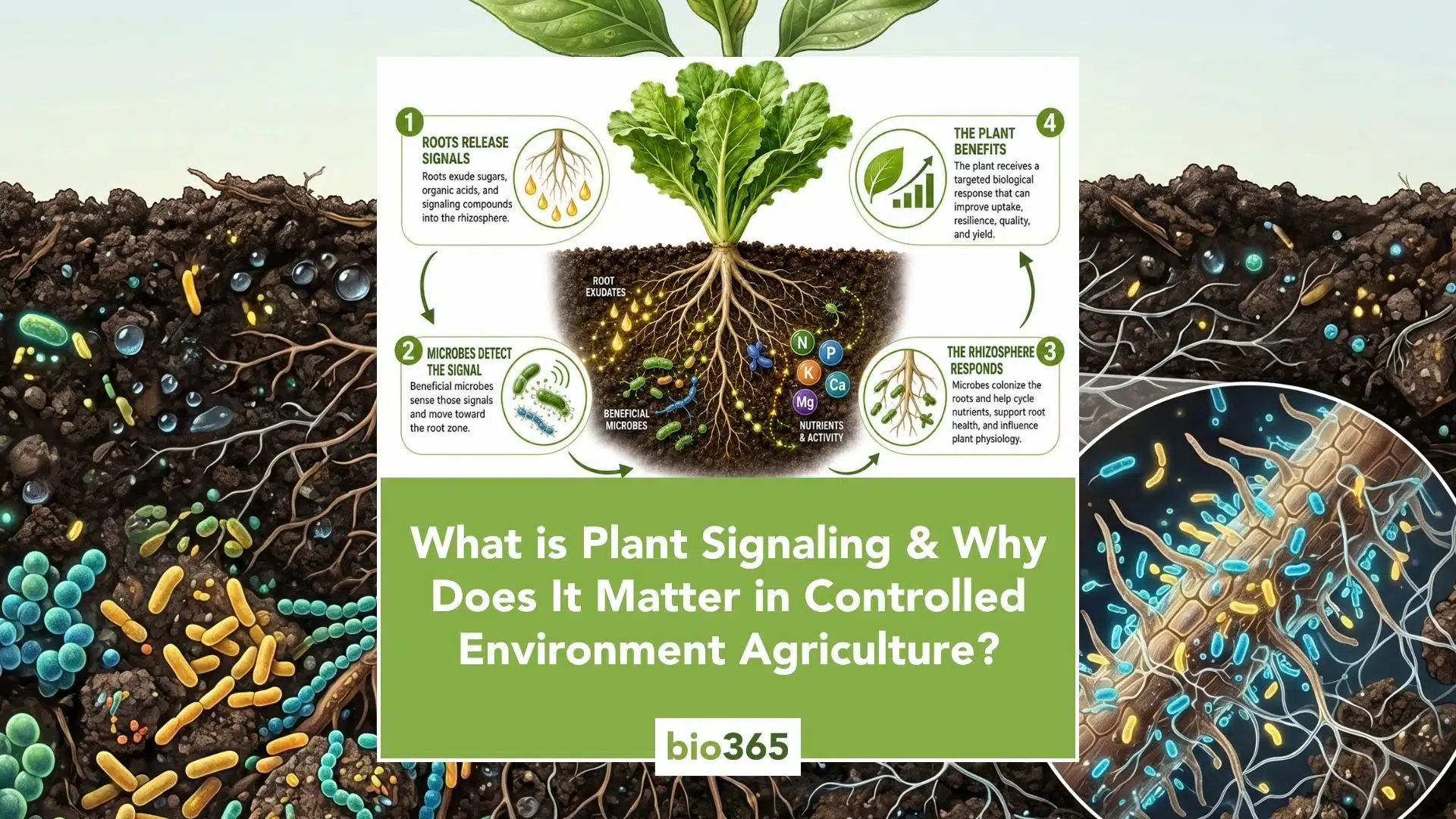
Your plants are talking continuously, chemically, and with remarkable precision. Understanding what they’re saying and whether anything in their root zone is listening may be one of the most important factors affecting crop quality and yields.
This critical communication between plants and their environment, particularly the microbial communities living in and around their roots, is called planned signaling.
Plant roots continually release chemical compounds into the surrounding root zone. Those compounds can influence which microorganisms become active near the roots, how nutrients cycle, how the plant responds to stress, and how biological partners interact with the plant.
Understanding plant signaling changes the way you think about growing media. A medium isn’t just something that holds a plant upright while you deliver water and fertilizer. The root zone can function as a dynamic biological environment where plants, microorganisms, nutrients, water, oxygen, and carbon continuously interact.
That’s how it works in nature, and nature got it right.
When the biological environment in the root zone is missing or severely limited, a plant can still grow. Modern hydroponic and inert-media systems have proven that. However, what those systems cannot reproduce through mineral nutrition alone is the full range of biological interactions plants evolved to use.
As a result, you can’t maximize quality or yield. You get a plant but not an ideal plant, and that translates directly to economic loss.
For commercial controlled environment agriculture (CEA) cultivators trying to maximize plant health, crop quality, consistency and expression of genetic potential, that difference matters significantly.
Key Takeaways
- Plant signaling is chemical communication within and around the plant. In the root zone, plants release compounds that influence microbial activity and help shape the rhizosphere microbiome.
- Root exudates aren’t simply waste products. Their composition changes with plant development, environmental conditions and biological pressures, giving plants a way to influence the environment immediately surrounding their roots.
- Beneficial microorganisms can respond to plant signals. Depending on the organism and interaction, microbes can participate in nutrient cycling, root development, pathogen suppression, and plant defense responses.
- A single microbial strain can provide a valuable specific function, but it can’t reproduce the functional diversity of a complex microbial community.
- bio365 uses biomimicry to build that biological functionality into growing media through clean-cultured wide-spectrum beneficial biology, bioCHARGE®, bioCORE® biochar, bioavailable nutrients, and engineered physical properties.
What Is Plant Signaling?
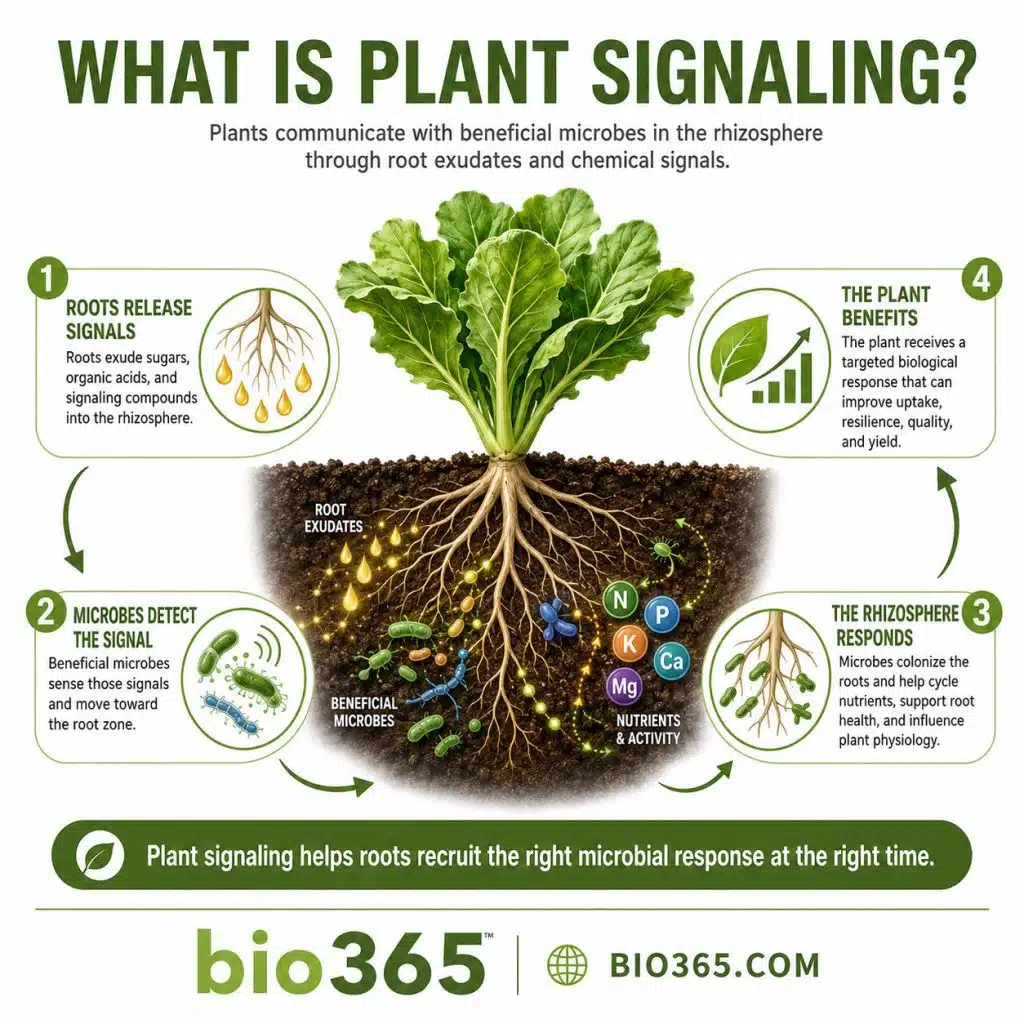
Plant signaling is the exchange and interpretation of chemical, molecular, and physiological information that allows a plant to respond to its environment and reach its full genetic potential.
Some signaling happens entirely within the plant. Hormones and other signaling molecules coordinate processes involving development, nutrient status, water stress, and defense.
Another important category takes place in the rhizosphere between roots and the surrounding microbial community. The rhizosphere is the narrow area surrounding roots where plant chemistry can dramatically change microbial activity and community structure.
Roots release a chemically diverse mixture of compounds that can include sugars, amino acids, organic acids, phenolic compounds, and other metabolites. Collectively, these materials are commonly referred to as root exudates.
It would be an oversimplification to say that every exuded molecule is a deliberate message. Some compounds provide carbon and nutrients to microorganisms. Others alter root-zone chemistry. Some act more directly as signals.
What science increasingly shows is that the overall chemistry produced by roots helps determine which microorganisms thrive close to the plant.
A landmark 2018 study published in Nature Microbiology found that changes in root exudate chemistry during plant development corresponded with the substrate preferences of different bacteria. The researchers concluded that specific exudate composition provides a mechanism through which plants influence assembly of the rhizosphere microbial community.
In practical terms, your plant changes the chemistry around its roots, and different microorganisms respond differently to that chemistry.
That’s the foundation of plant-microbe signaling.
Plants Don’t Passively Accept Whatever Is in the Root Zone
It’s easy to think about roots as intake structures. Water goes in. Nutrients go in. The plant grows.
Root biology is far more active than that.
Plants modify their immediate environment through root exudation. Those compounds influence microbial growth, nutrient chemistry, and the composition of organisms living closest to the roots.
The selection isn’t random. Research has repeatedly demonstrated that plants enrich particular microbial groups around their roots, although genotype, developmental stage, substrate, environmental conditions, and the microbial population available for recruitment all influence the final community.
One of the clearest examples comes from research involving Arabidopsis thaliana and the beneficial bacterium Bacillus subtilis.
Researchers found that when Arabidopsis was challenged by the foliar pathogen Pseudomonas syringae, its roots increased secretion of L-malic acid. That compound selectively recruited the beneficial bacterium Bacillus subtilis FB17 and promoted bacterial attachment and biofilm formation on the roots.
In other words, something happening above ground altered root chemistry (a pathogen), and a beneficial microorganism responded to protect the plant.
That’s plant signaling in action.
What Research Shows About the Benefits of Plant Signaling
The plant’s chemical signal is only half of the interaction. Microorganisms also produce compounds that plants perceive.
Hundreds or thousands of potential interactions can occur within a functioning root microbiome. The organisms present, their abundance, their relationships with one another and the physical and chemical conditions around the roots all influence what happens next. Research using defined microbial communities has shown that community composition can alter plant protection and other host outcomes.
Plant Signaling Improves Protection
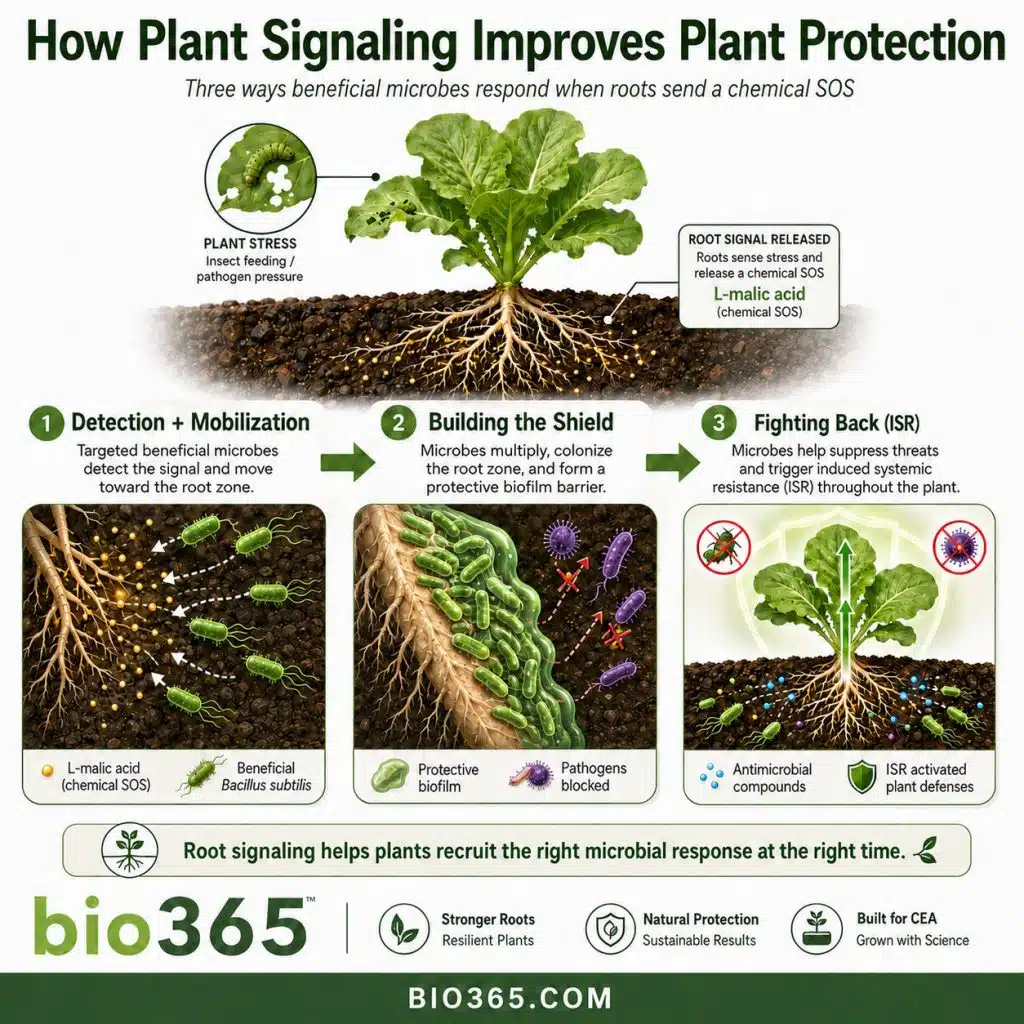
In follow-up research, scientists demonstrated that acetoin produced by Bacillus subtilis could activate induced systemic resistance in Arabidopsis. The microbial signal influenced defense responses beyond the immediate root zone.
That gives you a more accurate picture of what’s happening below ground.
The plant changes the root-zone chemistry. Microorganisms respond. Microbes produce metabolites of their own. The plant perceives microbial activity and adjusts its physiology.
It’s a feedback system. And it doesn’t depend on a single chemical or one species of bacterium.
Plant Signaling Improves Nutrient Uptake

Nutrient uptake provides another example of what plant signaling can accomplish. When researchers grew Arabidopsis under iron-limiting conditions, the plants altered their root chemistry and secreted coumarins, including a compound called fraxetin. Those compounds interacted with bacteria living around the roots.
The researchers found that this plant-microbe interaction relieved iron starvation and improved plant performance. When the plant’s coumarin pathway was disrupted, its microbiome changed and the plants struggled more under iron limitation. In other words, the roots signaled a nutritional problem and microorganisms in the rhizosphere helped the plant respond.
Phosphorus provides another well-studied example. When phosphorus becomes scarce, many plants increase the release of strigolactones from their roots. Arbuscular mycorrhizal fungi detect those chemical signals and increase hyphal branching near the roots. Once the symbiosis develops, fungal hyphae extend the plant’s effective nutrient-foraging network and deliver phosphorus to the plant through a specialized mycorrhizal phosphate uptake pathway.
This is why the value of a biologically active root zone goes beyond simply having microbes present. Plants evolved to interact with microbial communities as part of their nutrient uptake strategy. If the organisms capable of responding to those signals aren’t available, that biological pathway can’t perform the same function. Plants still expend a significant amount of energy sending calls for help, but there is nothing (or too little) in the soil to respond.
Plant Signaling Improves Quality
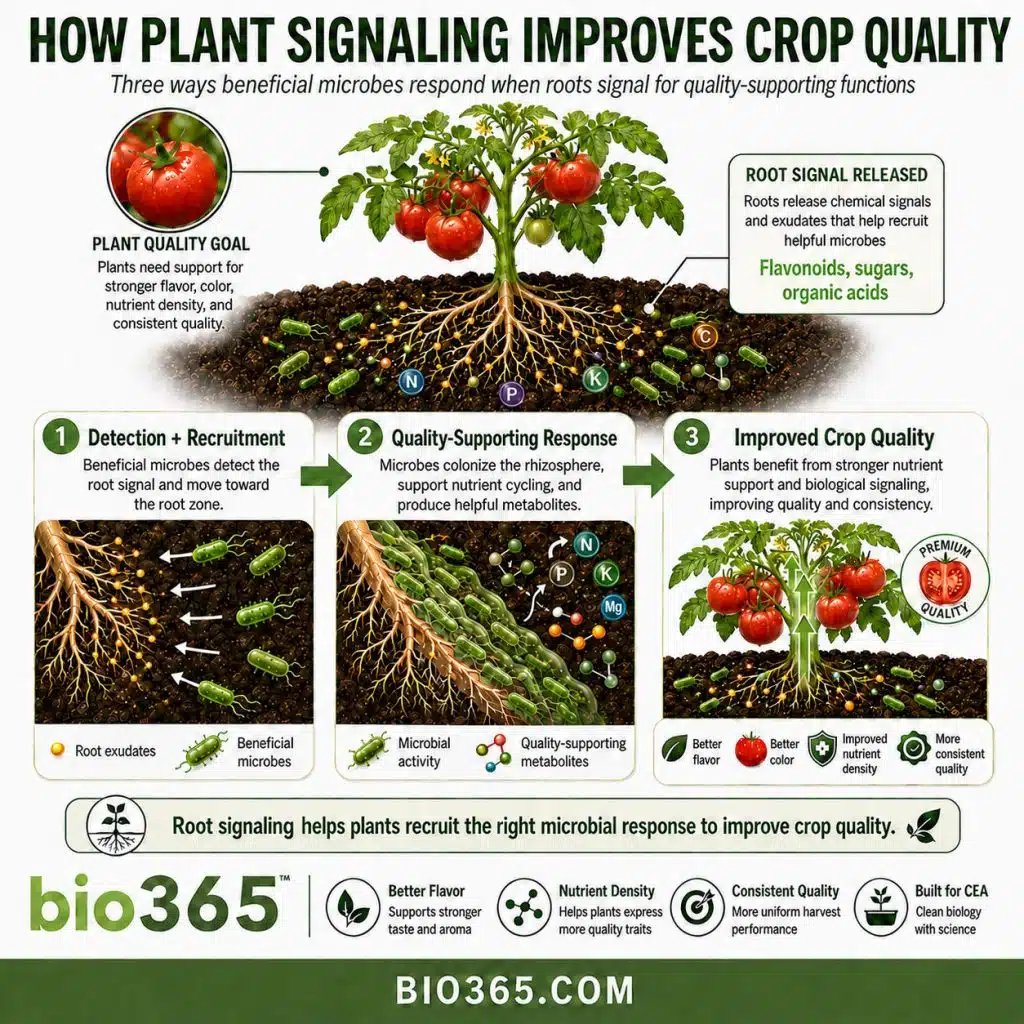
Fruit quality provides another striking example of why the biology surrounding your roots matters so much. In a 2026 Nature Communications study, researchers found that flavonoids released by tomato roots acted as signals that reshaped the rhizosphere microbiome and recruited beneficial Lysobacter soli bacteria.
The bacteria responded to those plant-derived compounds by increasing production of spermidine, a microbial metabolite that ultimately stimulated greater accumulation of vitamins C and B6 in the tomato fruits.
What makes the experiment especially compelling is what happened when the biology was removed.
Adding the same flavonoids increased fruit vitamin concentrations when plants were grown in natural soil, but the effect disappeared in sterilized soil. The researchers also found no significant differences in soil pH or nutrient concentrations that could explain the result.
The improvement in fruit quality depended on the microbiome being there to receive the plant’s chemical signals and respond. It’s a clear example of how communication that begins at the roots can ultimately change the quality of the crop you harvest.
Plant Signaling Improves Crop Yields
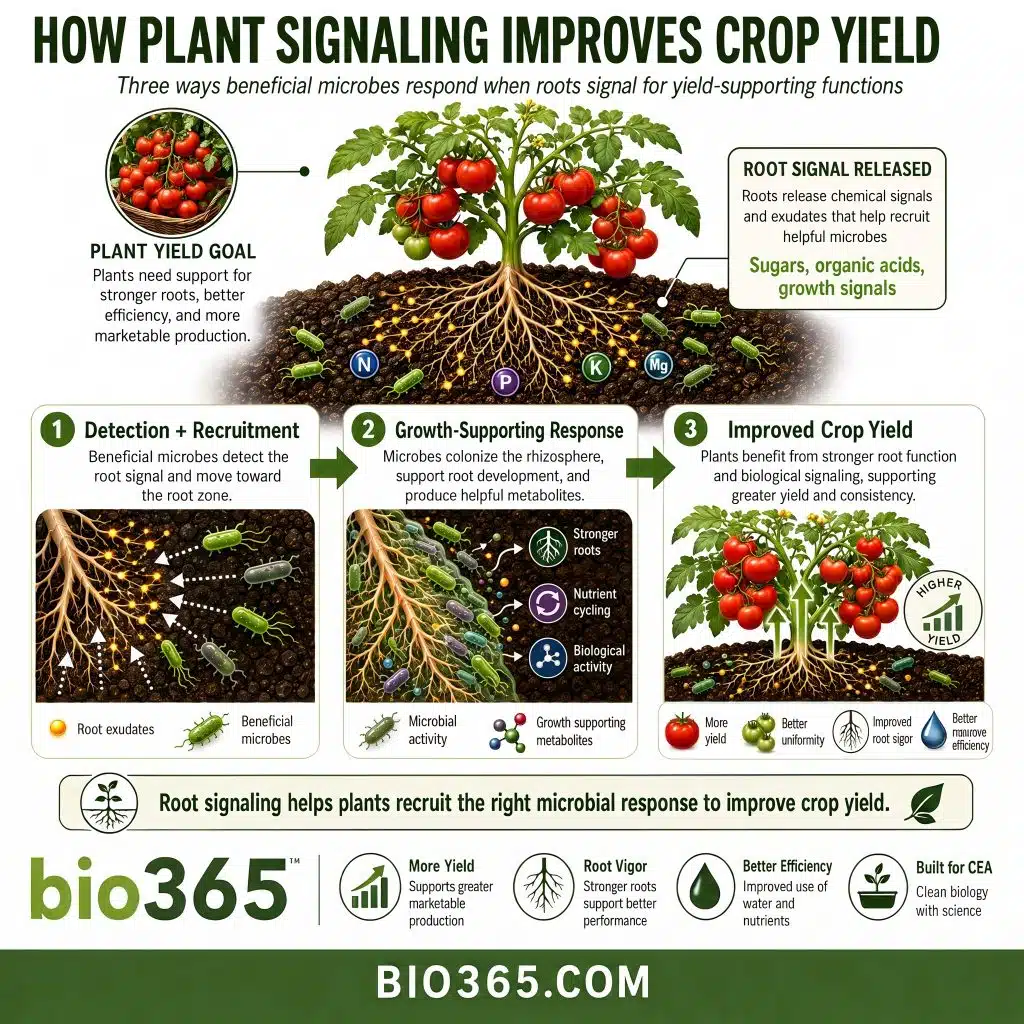
Crop yield provides another clear example of why plants need responsive biology in the root zone. In a 2025 Plant Communications study of potatoes grown under long-term continuous-cropping stress, researchers found that the plants secreted a root compound called nobiletin that attracted and promoted colonization by the beneficial bacterium Pantoea sp. MCC16.
That bacterium produces indole-3-acetic acid, or IAA, a plant hormone involved in root development. Its presence increased IAA levels in the rhizosphere and roots, stimulated the formation of adventitious roots and helped the plants overcome root-growth limitations associated with continuous cropping.
In follow-up pot experiments, applying nobiletin to stimulate the microbial response increased potato yield by 35.86%, while inoculation with Pantoea sp. MCC16 increased yield by 51.09% compared with the control.
The important lesson isn’t that you should expect those percentages in another crop or production system. It’s that the plant was able to change its root-zone chemistry to recruit a microorganism capable of helping solve a growth limitation, and that biological response ultimately translated into greater yield.
Without responsive biology in the root zone, the plant can still produce chemical signals, but that particular plant-microbe feedback pathway isn’t available to complete the response.
Why Plant Signaling Matters to Commercial Cultivators
Plant signaling connects directly to the things you’re trying to manage every day.
The root microbiome can influence plant functions related to nutrient availability, root development, defense responses, and tolerance of environmental stress. Researchers studying plant-associated microbial communities have demonstrated effects on nutrient availability, immune priming, and resistance to biological and environmental pressures.
Consider nutrient availability as an example.
The nutrient concentration in your feed solution tells you what you’ve supplied. It doesn’t tell you everything about what is happening within the rhizosphere or what the plant ultimately acquires.
Microbes can transform compounds, influence nutrient solubility, and alter the chemical environment surrounding roots.
Another example is plant protection.
The plant microbiome doesn’t function like an animal immune system in a literal anatomical sense, but beneficial microorganisms can contribute to disease suppression and help prime plant defense pathways. Soil biology is an important part of a plant’s defense system.
The same principle extends to plant development.
Your crop’s phenotype isn’t determined by genetics alone. Environmental conditions influence how genetic potential is expressed, and the root microbiome is a critical part of that environment.
Understanding this matters a lot when your business depends on getting more of the desired phenotype from every square foot of production space.
What Happens to Plant Signaling When You Grow in Inert Media?
First, let’s be clear that inert doesn’t necessarily mean sterile.
Rockwool, for example, may begin as an inert substrate, yet microorganisms can colonize the root zone after plants, water, and nutrients are introduced. Researchers have documented microbial communities associated with hydroponic rockwool production systems.
So the problem isn’t simply that an inert substrate contains zero microbes forever. The problem is that inert substrates don’t start with or support a controlled, functional community of beneficial organisms capable of participating in the processes your plant signals for.
If that community isn’t present, the plant can still release exudates. In fact, it will waste a significant amount of its energy releasing exudates with nothing there to respond. The plant can still change its root chemistry without a sufficient microbial community. What changes is the range of potential biological responses available.
You can supply nitrogen. You can supply phosphorus. You can control EC and pH, and you can alter irrigation frequency. Those are powerful tools, and commercial CEA wouldn’t exist without them.
However, what a fertigation system can’t do by itself is become a diverse living community capable of perceiving different plant-derived compounds, transforming materials biologically, interacting with other microbes, and sending biological signals back to the plant.
That’s why the distinction between keeping a plant well supplied and giving the plant access to a biologically interactive root zone is so important.
When you remove a functional microbiome from the production system, you remove biological mechanisms that the plant is genetically equipped to use.
You can compensate for some missing functions through mineral nutrition, environmental controls, crop protection products, microbial amendments, and management, but you haven’t recreated the complete biological system plants need to thrive.
If your objective is to create root-zone conditions that allow the broadest possible range of natural plant functions to operate, full microbial plant signaling can’t be ignored.
Why One Microbe Doesn’t Recreate a Microbiome
This is where the growing number of microbial amendments on the market can create confusion.
There are useful microbial inoculants. Certain Bacillus, Pseudomonas, Trichoderma, and other organisms have been studied extensively for specific plant-beneficial functions.
A single organism can matter. The malic acid research described earlier is an excellent example. Bacillus subtilis FB17 performed a specific beneficial function in response to a particular plant interaction.
But that evidence shouldn’t be interpreted to mean that one strain can substitute for an entire microbiome. It can’t. Not even close.
Different organisms have different metabolic capabilities. They respond to different plant signals. They influence different nutrients. They produce different metabolites. They interact with other organisms in different ways.
Research makes the importance of those combinations increasingly clear. In one experiment examining plant-fungal-bacterial symbiosis, researchers found complementary benefits when plants associated with both mycorrhizal fungi and nitrogen-fixing rhizobia. The combination improved nutrient acquisition and plant performance compared with association with only one of the symbionts.
This doesn’t mean more species are automatically better. Microbial ecology is more complicated than a species count.
It means functional breadth and community interactions matter.
A bottle containing one or several beneficial organisms may provide targeted biological functions. It shouldn’t be confused with a wide-spectrum biological system.
Biomimicry Offers a Different Approach
Nature doesn’t grow plants in biologically empty root zones. It uses complex systems in which roots, microorganisms, carbon, minerals, water, air and organic compounds interact continuously.
Biomimicry starts by studying those functional relationships and then asking how useful natural processes can be recreated under controlled conditions.
That’s the philosophy behind bio365’s approach to biomimicry in controlled environment agriculture. Instead of importing unclean, outdoor soil ecology into a CEA facility, the scientists at bio365 invented technology and processes to recreate important biological functions within an engineered growing medium that is safe for use in controlled environments.
The result is a root zone where beneficial biology can function just like it does in nature without relying on uncontrolled or unclean sources such as raw compost or worm castings.
How bio365 Engineers a Root Zone That Supports Plant Signaling
Plant signaling doesn’t become useful simply because microbes are added to a bag of substrate. The entire root-zone environment has to support the interaction.
For this reason, bio365’s system combines biological, chemical, and physical components.

Clean-Cultured Wide-Spectrum Beneficial Biology
At the center of the system is bioCHARGE®, bio365’s multi-patented biological platform.
bioCHARGE incorporates clean-cultured, wide-spectrum beneficial biology along with bioavailable nutrients and patented bioCORE® biochar. Rather than relying on compost or worm castings as the biological source, bio365 uses controlled activation and aging processes designed for commercial CEA production.
Wide-spectrum biology is essential because plant signaling isn’t based on one plant need and one microbial answer. Your root zone encounters changing conditions throughout propagation, establishment, vegetative growth, reproductive growth, and maturation. Nutrient demand changes. Irrigation changes. Root architecture changes. Environmental pressures change.
A biologically diverse system provides a broader pool of potential functions for a plant to interact with. That concept is consistent with the wider microbiome research showing that community composition and interactions influence plant outcomes.
bioCORE Biochar Creates Biological Infrastructure
Microorganisms also need somewhere to live.
bioCORE® is bio365’s patented engineered biochar technology. Its porous carbon structure provides a physical habitat within the root zone while also participating in water and nutrient retention.
The concept that biochar can become microbial habitat isn’t unique to bio365. Researchers examining aged wood-derived biochar have directly documented microbial colonization of biochar particles, which has led researchers to describe the biological zone associated with biochar as the “charosphere.”
The characteristics of the carbon matter as well. Inputs and production conditions affect pore structure, surface chemistry, and other properties, so “contains biochar” doesn’t tell you very much about how a growing medium will perform.
bio365 co-founder and lead scientist, John Gaunt’s, soil and carbon research provides useful context here. In a peer-reviewed experimental study co-authored by Gaunt, researchers demonstrated that black carbon could influence the cycling and physical distribution of other organic carbon in soil.
Bottom-line, research proves that carbon matrices can participate in complex biological and chemical processes. bio365’s engineered bioCORE biochar plays an important role in supporting plant signaling and enabling plants to reach their full genetic potential.
Bioavailable Nutrients Give the Biology Something to Work With
A microbial ecosystem can’t function independently from nutrient chemistry.
Therefore, bio365 integrates bioavailable nutrients into its biological system rather than treating biology and fertility as unrelated inputs.
This creates conditions in which plant signaling, microbial metabolism, and nutrient cycling can occur within the same root-zone environment. The bio365 team explains this relationship in more detail in our guide to beneficial biology in growing media.
That doesn’t eliminate the grower’s role in nutrition management. It adds biological processes to the system you’re already managing.
Porosity Supports the Biology and the Roots
Biology also needs the right physical environment.
The spaces between growing-media particles determine how much water and air the root zone can contain and how readily gases move through it. Roots need oxygen for respiration, and microbial communities are strongly influenced by moisture and oxygen availability.
Experimental work with container substrates has demonstrated that root and shoot growth can respond significantly to differences in air-filled porosity. That’s why bio365 treats growing media porosity as an engineered property rather than an afterthought.
The biological system can’t be separated from the physical system supporting it. If the root zone stays excessively saturated, oxygen availability becomes a limitation. If it dries too quickly, water stress becomes the dominant problem.
If pore structure isn’t consistent, different containers can behave differently even when your irrigation strategy is identical.
Plant signaling works inside that physical environment, so bio365 optimizes it through its patented utlimateAIR® technology.
The Root Zone Should Be Viewed as a System
This is the larger lesson for commercial CEA. You already manage your facility as a system.
Lighting affects transpiration. Transpiration affects irrigation demand. Irrigation affects EC. Temperature affects metabolism. VPD influences plant water movement.
The root zone deserves the same systems thinking.
Physical structure affects air and water. Air and water influence roots and microorganisms. Root exudates influence microorganisms. Microorganisms affect root-zone chemistry and send signals back to plants. Nutrient availability affects all of them.
Once you see those relationships, the physical, chemical, and biological properties of your growing media start looking a lot more important. It becomes an integral part of creating an optimal root zone system so your plants’ potentials aren’t limited.
What Should You Look for in a Biologically Active Growing Medium?
For commercial CEA production, simply seeing the word “living” or “microbial” on a bag isn’t enough.
You need to know where the biology comes from, how it is cultured, how consistent it is, whether the medium relies on compost or other uncontrolled biological materials, how contamination is managed, how the organisms are supported after production, if the biology is engineered into the media or added later, and whether the medium’s physical structure provides the water and oxygen conditions necessary for roots and microbes to function.
You should also ask whether you’re buying one microbial feature or an integrated root-zone system. That’s particularly important when comparing a single-strain inoculant with a growing medium engineered around biological functionality.
Frequently Asked Questions About Plant Signaling
What is plant signaling in simple terms?
Plant signaling is the way plants use chemical and physiological messages to sense conditions and coordinate responses. In the root zone, plants release compounds that influence surrounding microorganisms. Microorganisms can respond to those compounds and produce their own signals or metabolites that affect plant physiology.
What are root exudates?
Root exudates are compounds released by plant roots into the rhizosphere. They include sugars, amino acids, organic acids, and numerous secondary metabolites. Some provide energy or nutrients to microorganisms, while others influence microbial recruitment, nutrient chemistry, defense interactions, and microbial community assembly.
Can I recreate plant signaling by adding one beneficial microbe to inert media?
A single microbial strain can provide a useful targeted function. However, a single strain doesn’t contain the functional diversity of a complex microbiome. Studies of microbial communities show that microbial combinations and community structure can produce plant responses that differ from those associated with individual organisms.
Does beneficial biology automatically make growing media unsafe for CEA?
No. bio365 invented a patented, consistent, and clean biology culturing process without compost or worm castings that enables growers to deploy beneficial microbiology in controlled environments, allows plants to signal the clean microbiology when they need nutrients, water, or help battling pests and pathogens, and maximizes plant health, quality, resiliency, and yields
Why is biochar important to plant signaling?
Biochar can provide a porous physical habitat for microorganisms while interacting with water, nutrients, organic carbon, and root-zone chemistry. bio365’s bioCORE is an engineered biochar specifically incorporated into bio365 media as part of the biological infrastructure supporting bioCHARGE beneficial biology.
bio365 Enables Plant Signaling Safely for CEA
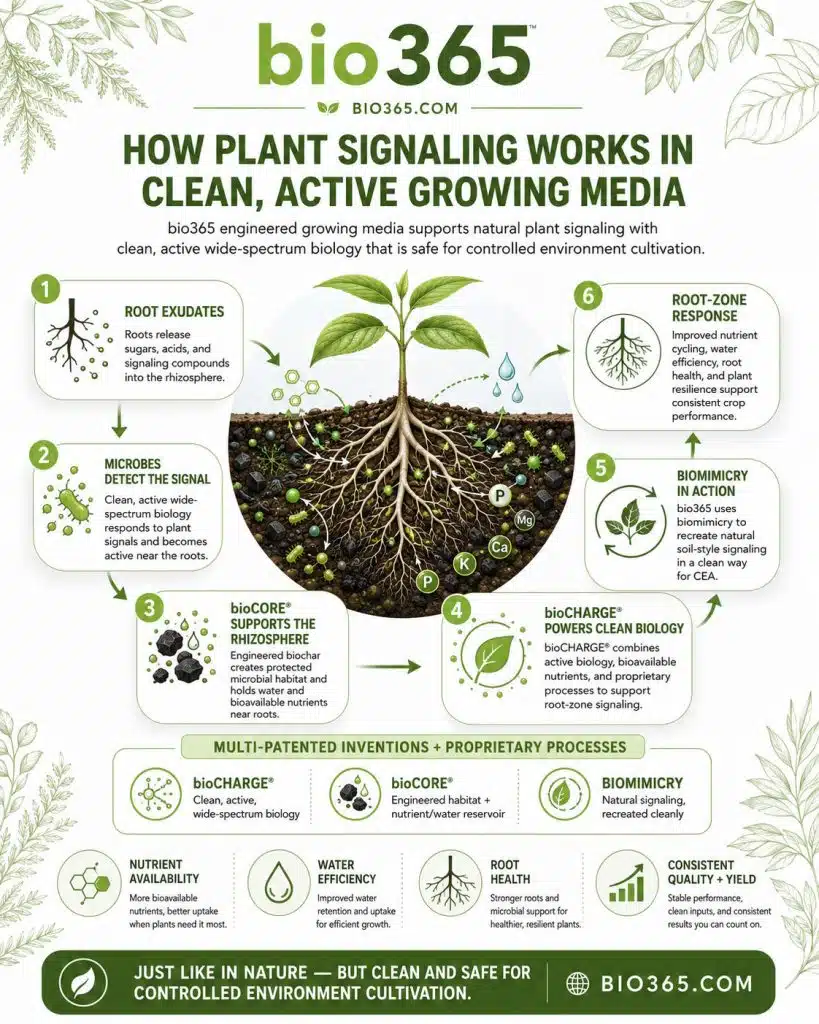
Here’s an important question. What happens when you give plants access to more of the biological functions they evolved to use while maintaining the cleanliness and consistency your facility requires?
Plant signaling shows why that question matters.
Plants aren’t passive recipients of whatever you put through an irrigation line. Their roots actively alter the rhizosphere. Microorganisms respond. Those organisms influence nutrient cycling, root-zone chemistry, plant defense, and other physiological processes.
A single inoculant can perform useful functions. A mineral nutrient program can provide precise fertility. An inert substrate can produce a successful crop. However, none of those facts changes the fundamental biology of the plant-microbe relationship.
bio365’s engineering is based on the scientific principles of biomimicry and was developed specifically to address the challenge of safely bringing the symbiotic relationship between plants soil biology to CEA.
Our clean-cultured wide-spectrum beneficial biology, bioCHARGE, bioCORE biochar, bioavailable nutrients, and engineered porosity work together to create a biologically active root zone without requiring cultivators to bring uncontrolled compost-based biology into their facilities.
Nature developed plant-microbe communication long before controlled environment agriculture existed. Your plants depend on it to reach their full genetic potential, and bio365 safely brings it back to CEA.