
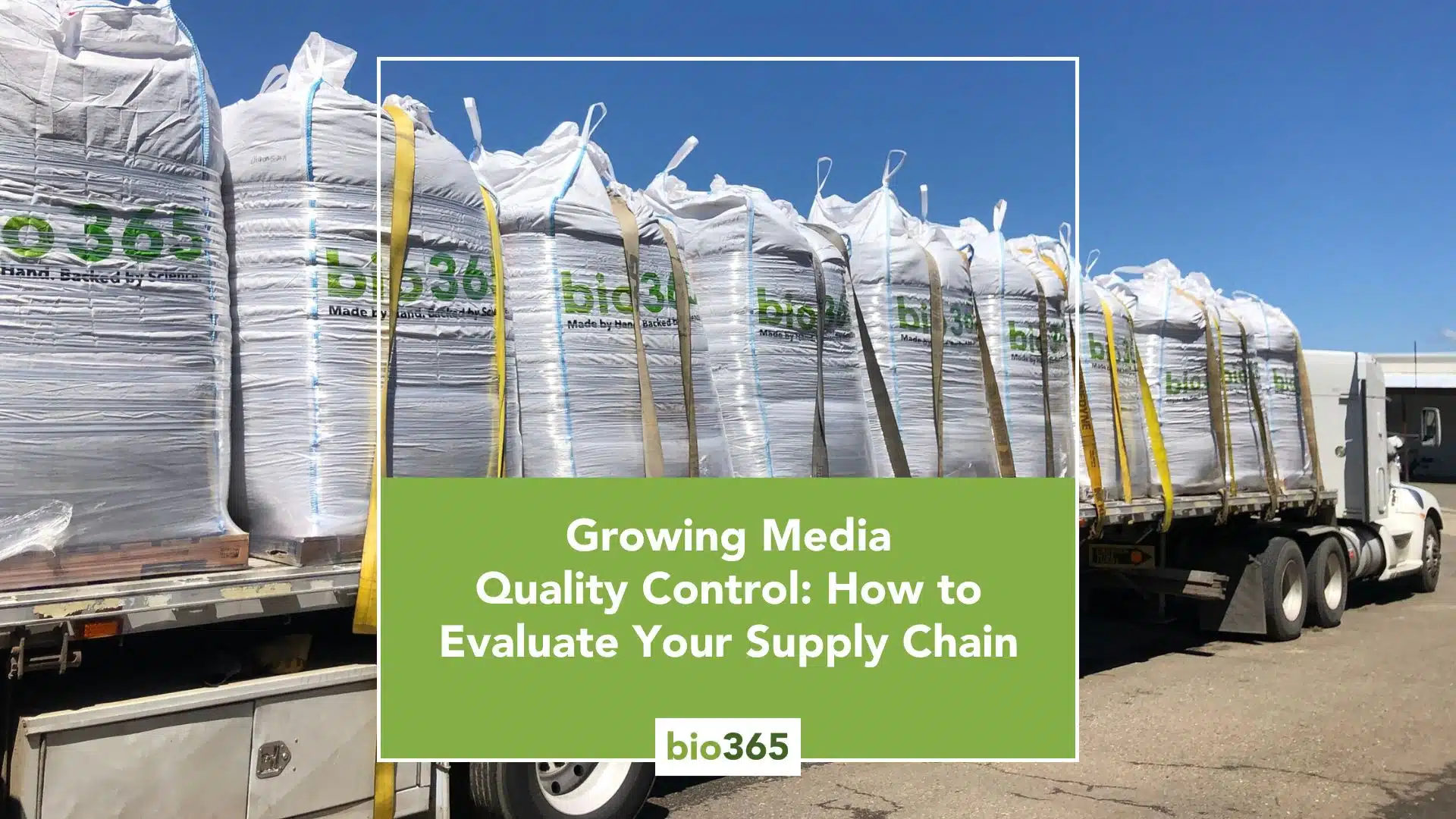
If you’ve ever discovered pests, pathogens, or inconsistent performance from what you thought was clean growing media, you’re not alone. For commercial cultivators operating in controlled environments, compromised substrate quality isn’t just an inconvenience—it’s a potentially catastrophic event that can devastate entire crops, inflate costs, and damage your bottom line.
The reality is simple: your controlled environment agriculture supply chain is only as strong as its weakest link. When you’re cultivating cannabis or food crops indoors at commercial scale, you need absolute consistency from every input. Your climate controls are dialed in, your irrigation system is automated, and your team follows strict protocols. But if your growing media arrives contaminated or inconsistent, all that precision means nothing.
Let’s walk through exactly how to evaluate your growing media suppliers so you can avoid expensive problems and ensure every batch performs predictably.
Understanding the Real Risks of Poor Quality Control
Before diving into evaluation criteria, it’s worth acknowledging what’s actually at stake. Problems with substrate quality don’t just affect one tray or one room—they cascade through your entire operation.
Contaminated media can introduce fungus gnats, root aphids, pythium, or other pathogens directly into your facility. Once established, these problems require extensive remediation that pulls your team away from productive work. You’re looking at application costs for biocontrols or treatments, potential crop losses, and the very real possibility of contaminating future crop cycles.
Then there’s the yield impact. Inconsistent media means inconsistent water retention, air porosity, and nutrient availability across your facility. Some plants thrive while others struggle, making standardized feeding programs nearly impossible to optimize. Your cultivation team spends unnecessary time troubleshooting individual plants instead of managing the crop as a uniform whole.
The financial implications extend beyond immediate crop losses. Failed inspections, rejected batches, delayed harvests, and emergency purchases of replacement media all drain resources. For cannabis cultivators especially, regulatory scrutiny means contamination issues can jeopardize your license.
How to Evaluate Growing Media Suppliers: The Essential Criteria
Your vendor selection process for growers should start with a fundamental question: What happens before this media arrives at my door? Understanding raw materials quality control in horticulture means looking beyond marketing claims to examine actual processes.
Raw Materials Sourcing and Receiving
Start by asking potential suppliers about their raw materials purchasing protocols. Quality substrate begins with quality inputs. How do they select and vet their coir, peat, and other components? Do they source from consistent suppliers or take whatever is available at the best price?
Just as importantly, what happens when those raw materials arrive at their facility? Reputable suppliers conduct incoming inspections and testing to verify every load meets their specifications before it enters production. This prevents contaminated or inconsistent materials from ever making it into finished products.
Production Environment and Controls
Good manufacturing practices and Food Safety Modernization Act testing aren’t optional. They’re essential. Ask about facility management protocols. Is the production environment itself clean and controlled? Are there protocols to prevent cross-contamination between batches or products?
Production controls matter enormously. Consistent blending processes, controlled moisture levels, and standardized procedures ensure every bag or yard of media matches the last. When evaluating growing media suppliers, look for operations that treat media production with the same rigor you bring to cultivation.
Pathogen-Free Growing Substrate and Testing
This is non-negotiable: commercial cultivation media testing should be standard practice, not a premium add-on. Suppliers committed to growing media contamination prevention conduct regular testing and can provide documentation.
Ask specifically about their testing protocols. What pathogens do they screen for? How frequently? Most importantly, what happens if a batch fails testing? The answer should be clear: it never reaches customers.
Documentation and Traceability
Here’s where many suppliers fall short. Batch tracking systems for media allow you to trace any quality issue back to its source and identify potentially affected inventory. Every delivery should include clear batch identification.
Certificates of conformance provide written verification that products meet specified standards. OMRI listing shows media is appropriate for organic use. For food crop production, FSMA compliance confirms suppliers follow the Food Safety Modernization Act Produce Safety Rule. These aren’t just bureaucratic paperwork. They’re your evidence that substrate quality assurance processes are actually in place.
Ongoing Quality Support
Your relationship with growing media suppliers shouldn’t end at delivery. Quality suppliers provide technical support when questions arise. They stand behind their products and help you troubleshoot if unexpected issues occur.
Real-World Application: bio365’s 42-Point Difference
Consider what comprehensive quality control actually looks like in practice. At bio365, we implement a 42-point quality control process that examines every aspect of the supply chain and production—from raw material selection through final packaging and delivery. This isn’t about checking boxes; it’s about ensuring that clean growing media for cannabis and food crops actually leaves our facility clean, every single time.
This level of scrutiny is unmatched among growing media manufacturers. Raw materials are inspected and tested upon arrival. Controlled production environments are maintained to prevent contamination. Finished products undergo final quality verification. Batch tracking connects every bag to its production history.
The result? Consistency. When you dial in your irrigation program, nutrient schedule, and environmental controls with one batch, you know the next batch will perform identically. That predictability translates directly to labor savings and optimized yields.
Making the Right Choice for Your Operation
Evaluating your growing media supply chain isn’t a one-time exercise. It’s an ongoing commitment to quality inputs. The suppliers you choose become partners in your success or obstacles to overcome.
As you assess potential vendors, remember that the cheapest option often becomes the most expensive when you factor in contamination risks, inconsistent performance, and the time your team spends compensating for poor quality.
Ask the hard questions. Request documentation. Verify that FSMA compliance isn’t just a claim but a verified reality. Insist on batch tracking and certificates of conformance. Choose suppliers who view media quality assurance as seriously as you view crop quality.
Your controlled environment gives you unprecedented ability to optimize growing conditions. Don’t let inconsistent, low-quality inputs undermine that investment. When you control your supply chain with the same precision you control your facility’s environment, you set yourself up for predictable, profitable results crop after crop.
The foundation of great cultivation literally starts at the foundation—with growing media you can trust completely.